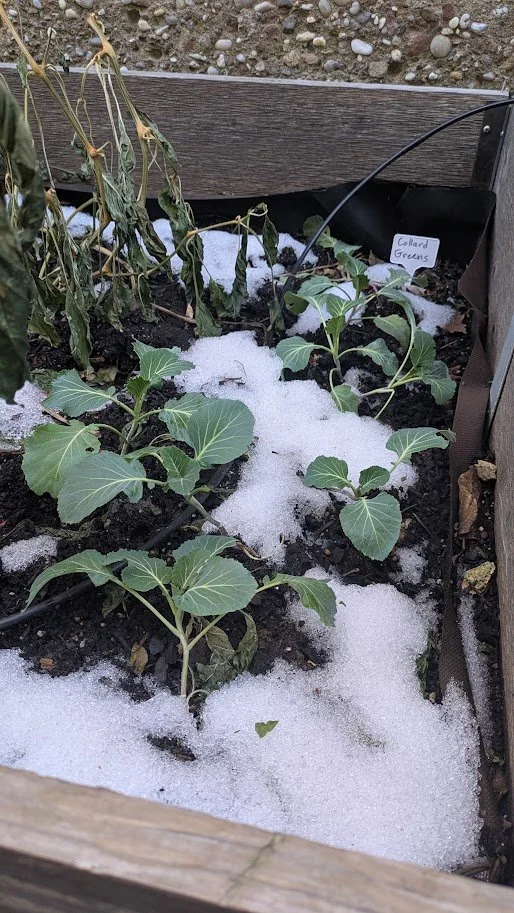
collard greens - קוּלַארְד
Agricultural Information:
Family: Cruciferae (Brassicaceae)
Scientific Name: Brassica oleracea var. acephala
Collard greens are one of the oldest cultivated members of the cabbage family originally from the Eastern Mediterranean and Asia Minor, eaten for thousands of years. The plant is both cold and heat tolerant and is able to withstand these more extreme temperatures better than related plants like cabbage or kale.
The name collard evolved over time from the old English word “colewort,” meaning wild cabbage. In the American South, collard greens became a symbol of resilience and nourishment, especially during times when people relied on hardy, easy-to-grow foods.
Collard greens are typically eaten cooked to soften their fibrous leaves. They are commonly sauteed or cooked into stews.
Halachic Information:
Kilei zera’im and kilei hakerem*: Collard greens are categorized as a vegetable and are subject to the laws of kilayim. They should not be planted near other edible annuals or grapevines.
Infestation: Similar to other leafy vegetables, collard greens are often heavily infested with insects.
*Kilei zera’im & kilei hakerem (interplanting – annuals & grapevines) generally do not apply outside of the land of Israel; the following laws apply only within the land of Israel.
Information about plants as they relate to torah and mitzvot has been generously provided by Mercaz Torah VeHa’aretz Institute.
